

Updated September 2026
Genetic Testing for Autoinflammatory Diseases/Periodic Fever Syndromes
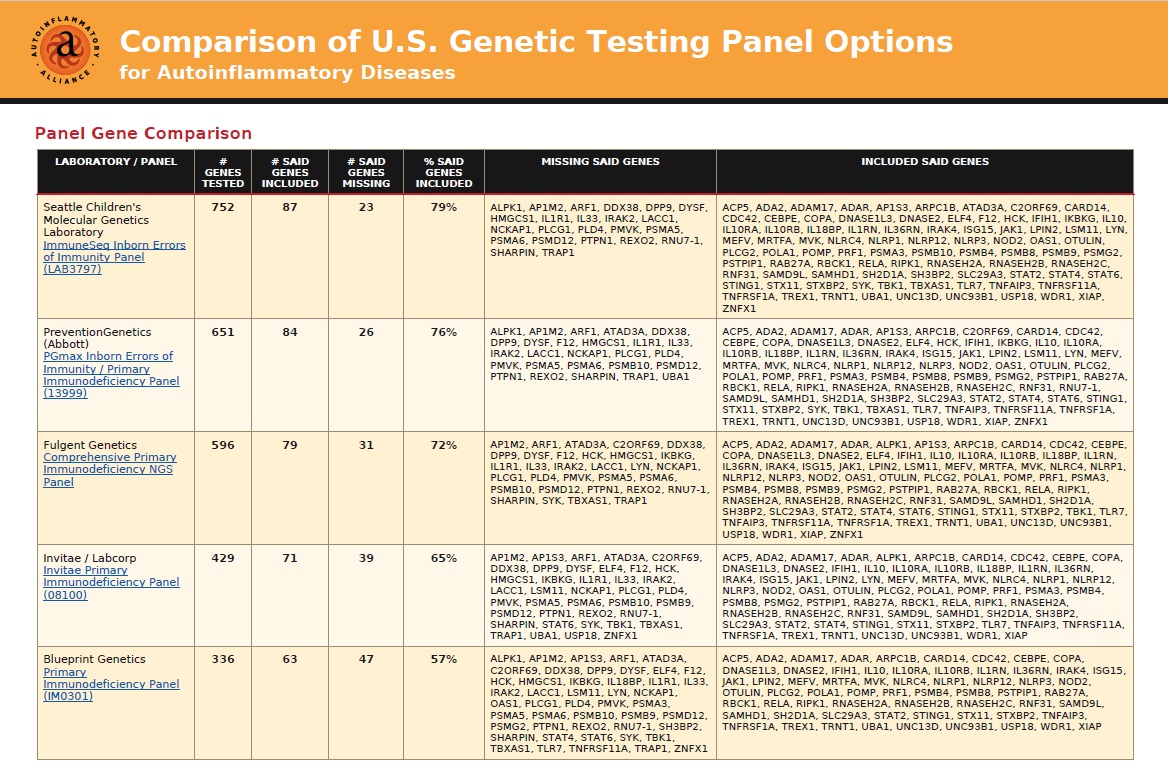
Genetic testing is an important part of the diagnostic evaluation for systemic autoinflammatory diseases (SAIDs). Since many of the autoinflammatory diseases share similar symptoms that may include recurrent high fevers, mouth ulcers, swollen lymph nodes, rashes, joint pain and/or swelling, and other symptoms, running a genetic panel that tests for multiple syndromes at once is both efficient and cost-effective. It also reduces the chances of missing the cause of the symptoms or other genetic conditions when an individual has genetic findings associated with more than one condition.
The Autoinflammatory Alliance has compared several broad genetic testing panels available in the United States and internationally to help patients, families, and healthcare professionals understand current testing options.
Comparison of U.S. Genetic Testing Panels for Autoinflammatory Diseases
More than 100 genes have been associated with autoinflammatory diseases and autoinflammatory manifestations, and that number continues to grow.
Our comparison includes:
- number of genes tested
- percentage of autoinflammatory-associated genes included
- SAID-associated genes not included on each panel
- provider ordering information
- financial assistance
- sponsored or free testing programs
- genetic counseling services
- international availability
Laboratories periodically update their panels, programs, and ordering requirements. Always confirm current information directly with the laboratory.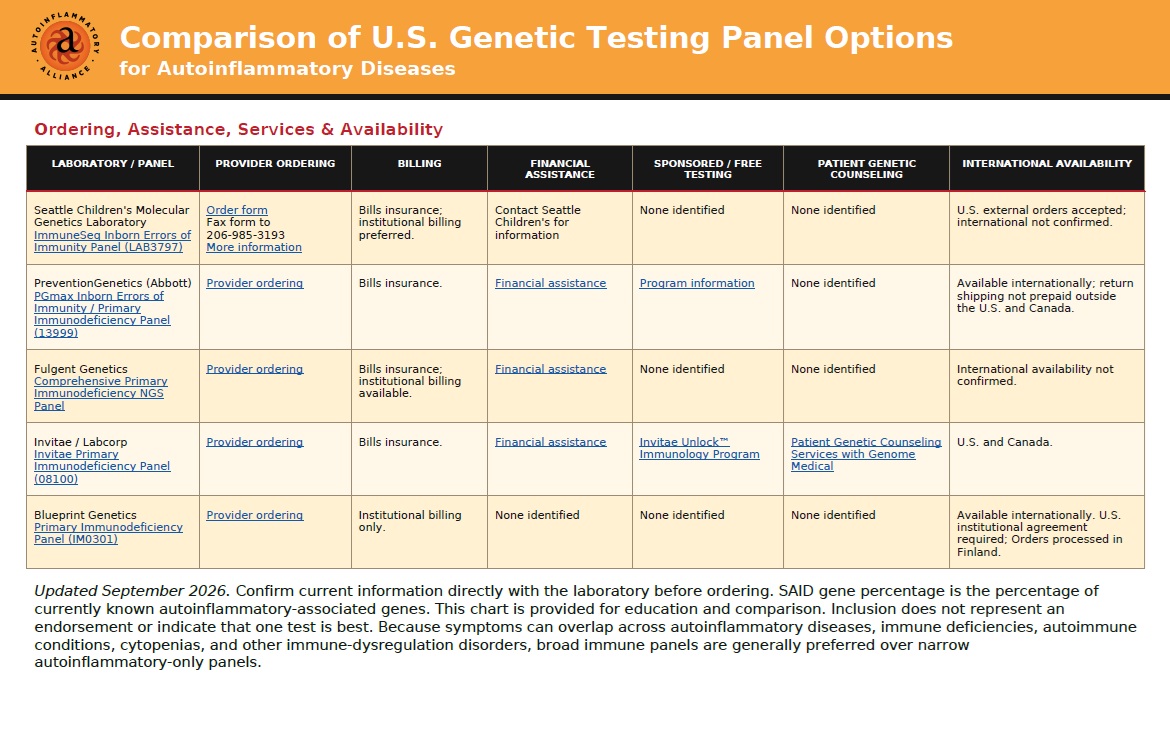
Why We Compare Broad Immune-Dysregulation Panels
Autoinflammatory diseases are now classified within the broader group of inborn errors of immunity. Autoinflammatory symptoms, such as fever, rashes, diarrhea, and joint pain, may overlap with primary immune deficiencies, immune dysregulation, autoimmune disease, inflammatory bowel disease, and other immune disorders. For this reason, our comparison focuses on broad inborn errors of immunity/primary immunodeficiency panels rather than small periodic fever or autoinflammatory-only panels.
A broader panel may be particularly useful when the clinical picture is complex or does not clearly point to a single disorder. The right test, however, depends on the individual’s medical history, symptoms, laboratory findings, family history, and suspected diagnosis.
Autoinflammatory Genetic Testing Panels Compared
Seattle Children’s ImmuneSeq Inborn Errors of Immunity Panel
Seattle Children’s ImmuneSeq Inborn Errors of Immunity Panel (LAB3797) tests 752 genes. It includes 87 SAID-associated genes.
Seattle Children’s accepts external U.S. orders. The laboratory bills insurance, although institutional billing is preferred. Patients or providers can contact Seattle Children’s about financial aid. International ordering was not confirmed for this update.
Prevention Genetics PGmax Inborn Errors of Immunity / Primary Immunodeficiency Panel
The Prevention Genetics PGmax panel (13999) tests 651 genes and includes 84 SAID-associated genes.
Prevention Genetics bills insurance and offers financial aid. The panel is available internationally, although return shipping is not prepaid outside the United States and Canada.
Fulgent Comprehensive Primary Immunodeficiency NGS Panel
Fulgent’s Comprehensive Primary Immunodeficiency NGS Panel tests 596 genes and includes 79 SAID-associated genes.
Fulgent bills insurance and offers institutional billing and financial assistance.
Invitae Primary Immunodeficiency Panel — Test 08100
The Invitae Primary Immunodeficiency Panel (08100) tests 429 genes and includes 71 SAID-associated genes.
Invitae bills insurance and offers financial assistance. It also has the Invitae Unlock™ Immunology Program for qualifying testing and offers patient genetic counseling through Genome Medical.
Blueprint Genetics Primary Immunodeficiency Panel
The Blueprint Genetics Primary Immunodeficiency Panel (IM0301) tests 336 genes and includes 63 SAID-associated genes.
Blueprint is available internationally, but U.S. ordering is more limited than the other panels in this comparison. U.S. orders require an institutional agreement, billing is institutional only, and testing is processed in Finland. Blueprint Genetics U.S. ordering information.
Who Can Order Genetic Testing?
These are medical genetic tests, and they do need a healthcare provider to order the test. Any doctor, including a pediatrician or primary care doctor, can order a genetic panel, and in most cases, insurance will cover the test. Exact ordering requirements vary by laboratory.
Patients outside the United States should check international availability directly with the laboratory.
 What Do Medical Guidelines Say About Genetic Testing for Autoinflammatory Diseases?
Genetic testing has become increasingly important as more monogenic autoinflammatory diseases and disease-associated genes have been named.
In the 2019 Textbook of Autoinflammation, Ceccherini, Rusmini, and Arostegui wrote that,
“The importance of genetic tests to reach a definitive diagnosis has become evident during the past few years.”
“Reliable diagnosis of SAIDs is crucial for early access to treatment adapted to the underlying disease. As disease manifestations may overlap, SAID diagnosis is highly dependent on genetic testing.”
EULAR/American College of Rheumatology guidance also recommends next-generation sequencing (NGS)-based genetic testing as part of the diagnostic workup for several genetically defined autoinflammatory diseases.
While genetic testing does not replace clinical evaluation, it is one piece of the clinical picture. Results must be interpreted together with the patient’s symptoms, other laboratory tests, examination findings, family history, and response to treatment.
Is There a Genetic Test for PFAPA?
PFAPA does not have a single diagnostic genetic test yet. PFAPA is still a clinical diagnosis.
However, hereditary periodic fever syndromes can sometimes look like PFAPA.
In a study by Gattorno and colleagues, some children who met PFAPA clinical criteria were found to have diagnostic variants associated with mevalonate kinase deficiency (MKD), TRAPS, or familial Mediterranean fever (FMF).
Genetic evaluation may therefore be considered when symptoms are atypical for PFAPA, or if the child has other symptoms suggesting another autoinflammatory disorder.
What Does a Negative Genetic Test Mean?
A negative genetic panel does not rule out an autoinflammatory disease.
Not every autoinflammatory disease has a known single-gene cause, and current genetic testing cannot detect every possible disease-causing genetic change. A gene associated with the patient’s condition may also not be included on the panel that was ordered.
When clinical suspicion is still high, more testing may include more specialized genetic testing, whole-exome sequencing (WES), whole-genome sequencing (WGS), testing for mosaicism, or evaluation at a center with expertise in autoinflammatory or undiagnosed diseases.
Clinical findings are still important even when genetic testing is negative or inconclusive.
Additional Diagnostic Resources
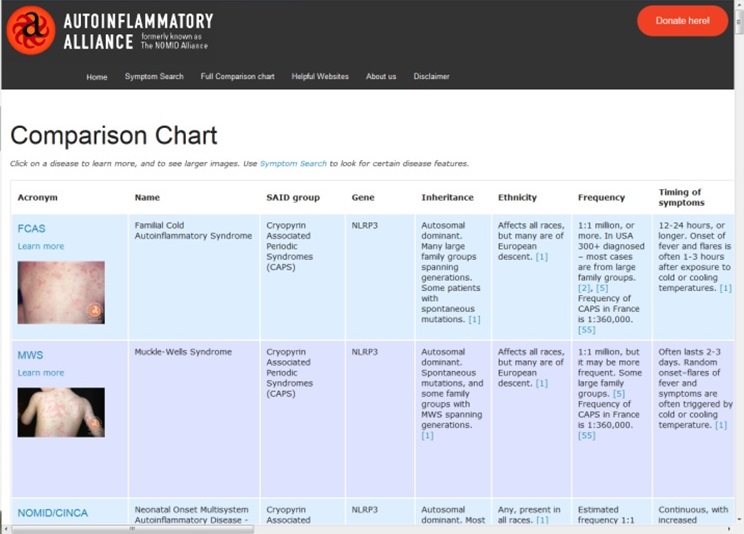
Autoinflammatory Search is a free tool for reviewing symptoms and other features associated with systemic autoinflammatory diseases.
The NIH Genetic Testing Registry provides information about genetic tests offered by laboratories in the United States and internationally.
Undiagnosed Diseases Network Foundation (UDNF) Guide to Genetic Testing
This UDNF guide provides guidance about when genetic testing may be appropriate. This includes in cases of “Recurring Health Issues: Immune system dysregulation, frequent infections, or other recurring symptoms.”
References
- Ceccherini I, Rusmini M, Arostegui JI. Genetic Aspects of Investigating and Understanding Autoinflammation. In: Hashkes PJ, Laxer RM, Simon A, eds. Textbook of Autoinflammation. Springer; 2019:19–48. doi:1007/978-3-319-98605-0_2.
- Gattorno M, Caorsi R, Meini A, et al. Differentiating PFAPA syndrome from monogenic periodic fevers. 2009;124(4):e721–e728. doi:10.1542/peds.2009-0088.
- Shinar Y, Ceccherini I, Rowczenio D, et al. ISSAID/EMQN Best Practice Guidelines for the Genetic Diagnosis of Monogenic Autoinflammatory Diseases in the Next-Generation Sequencing Era. Clinical Chemistry. 2020;66(4):525–536. doi:1093/clinchem/hvaa024.
- Romano M, Arici ZS, Piskin D, et al. The 2021 EULAR/American College of Rheumatology Points to Consider for Diagnosis, Management and Monitoring of the Interleukin-1 Mediated Autoinflammatory Diseases. Arthritis & Rheumatology. 2022;74(7):1102–1121. doi:1002/art.42139.
This information is provided for educational purposes and is not a recommendation or endorsement of any laboratory or genetic test. Genetic testing should be selected and interpreted by qualified healthcare professionals. Panel content, eligibility programs, costs, and ordering requirements may change.
